

Binding Activity: The “First Molecular Handshake” – Decoding Interaction Signatures of Bio-Active Proteins
Fundamentals, Assays and Industrial Implications of Target-Binding Characterisation for Recombinant Proteins
HUSTON, TX, UNITED STATES, November 3, 2026 /EINPresswire.com/ -- Bio-active proteins execute diverse biological functions largely relying on specific molecular recognition. Among three major functional dimensions of bio-active proteins, binding activity represents the most fundamental prerequisite. Antigen recognition by antibodies, receptor-ligand engagement, and transcription-factor docking onto DNA sequences all start from accurate molecular binding. Analogous to a key inserting precisely into its lock, loss of binding capability abolishes downstream catalytic events, signal transduction and cellular regulation. Consequently, binding activity serves as a critical quality benchmark for antibodies, receptors and ligands, and forms an indispensable component of complete functional validation for bio-active proteins. This article clarifies core concepts, mainstream analytical approaches, data interpretation and real-world industrial value of binding activity to assist global researchers in reagent evaluation and experimental planning.
What Is Binding Activity
Binding activity describes a protein’s intrinsic capacity to specifically recognise and associate with its target molecule. Such recognition is highly selective: the protein preferentially binds its cognate target while minimising non-specific interactions with irrelevant molecules.
Molecular binding arises from non-covalent forces, including hydrogen bonds, hydrophobic interactions, electrostatic attraction and van der Waals forces. Two essential dimensions define this molecular interaction:
Affinity: The tightness of molecular association, quantified by equilibrium dissociation constant (KD). A smaller KD value reflects stronger binding affinity.
Kinetic profile: The speed of association and dissociation, defined by association rate constant (ka) and dissociation rate constant (kd), depicting the full dynamic binding cycle.
For therapeutic antibodies, binding activity nearly equals their overall biological function. Once deprived of antigen-binding ability, an antibody becomes a non-functional immunoglobulin. For receptors-ligand pairs, target binding is an obligate upstream trigger for downstream cellular signalling cascades.
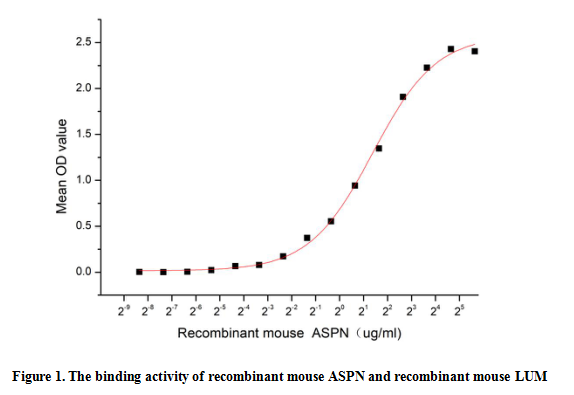
Figure 1. Functional binding ELISA verifying binding between recombinant mouse ASPN and recombinant mouse LUM.
Core Assays for Binding-Activity Validation
Functional Binding ELISA
Functional binding ELISA is a prevailing high-throughput preliminary screening tool for binding activity. Target molecules are immobilised on microplate wells as bait analytes. Upon addition of test protein, specific binding events can be detected by enzyme-conjugated secondary antibodies through colorimetric output, where signal intensity correlates with bound-protein quantity. Featuring simple workflows and suitability for batch testing, this assay supports EC₅₀ calculation via concentration-gradient titration to rapidly assess protein-binding performance.
Surface Plasmon Resonance (SPR)
SPR is widely acknowledged as the gold-standard assay for binding-activity characterisation with unique advantages of real-time and label-free measurement. Target molecules are immobilised on sensor-chips. As analyte flows over the chip surface, SPR records continuous association-dissociation profiles and delivers three key parameters: association rate constant (ka), dissociation rate constant (kd) and equilibrium dissociation constant (KD).
Beyond confirming whether binding occurs, SPR quantifies binding kinetics, interaction strength and complex stability. These kinetic datasets are vital for dissecting protein mechanisms and evaluating the potency of drug candidates.
Co-Immunoprecipitation (Co-IP)
Co-IP is applied to explore protein-protein interactions under native intracellular physiological conditions. Specific antibodies capture target proteins from cell lysates; interacting partners are co-precipitated and subsequently identified by Western Blot. This method closely mimics in-vivo physiological environments yet cannot output quantitative affinity metrics.
Isothermal Titration Calorimetry (ITC)
ITC quantifies molecular interactions by directly measuring heat flux generated during binding events. It generates comprehensive thermodynamic parameters including KD, enthalpy change and entropy change to uncover molecular-binding driving forces. Conducted in liquid phase without labelling, ITC produces highly reliable affinity results.
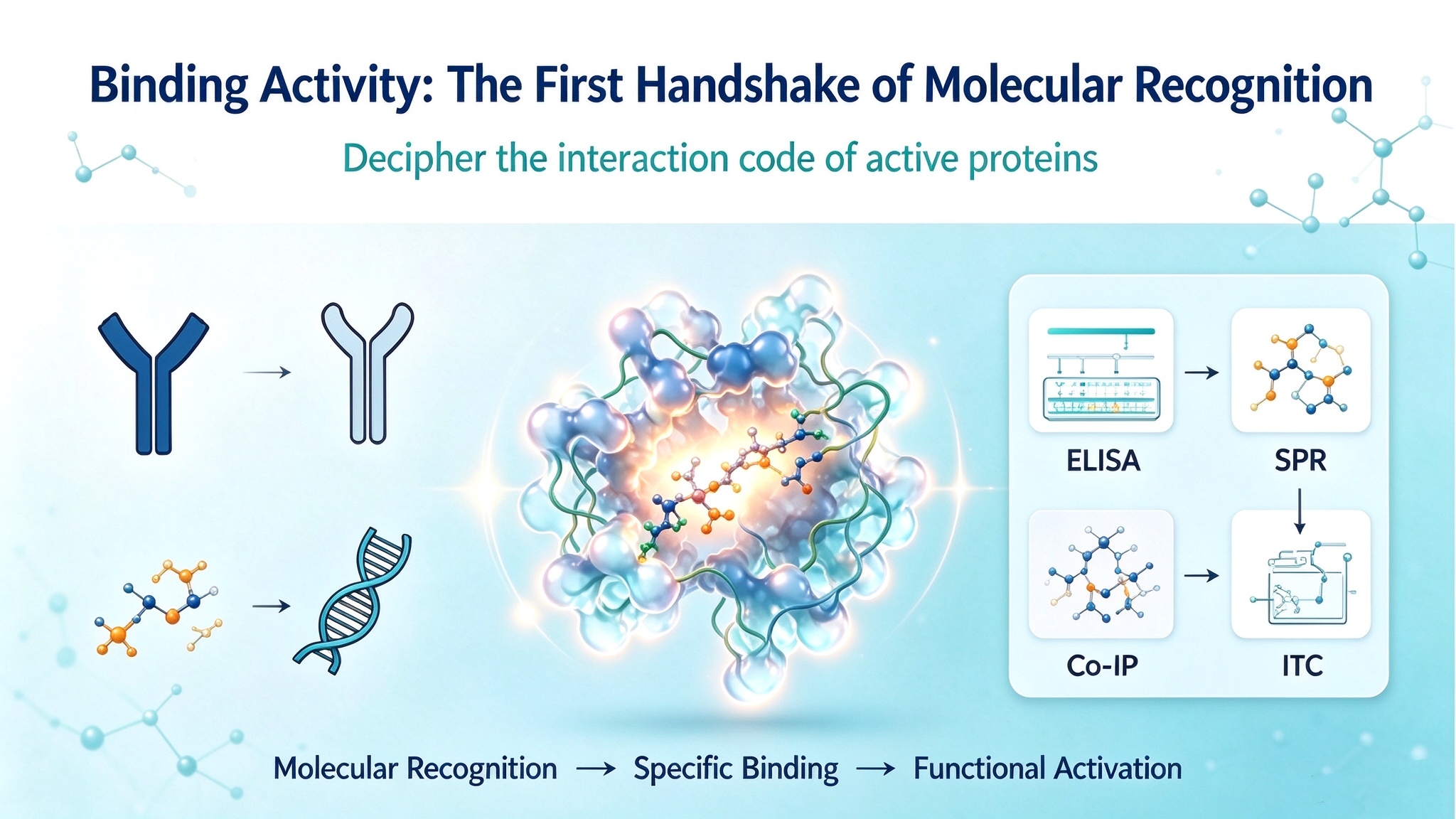
Figure 2. Binding activity: the first handshake of molecular recognition — deciphering interaction signatures of bio-active proteins.
Decision Framework: When to Perform Binding-Activity Testing
Binding-activity validation is not mandatory for every bio-active protein; testing requirements are determined by the protein’s native core biological function.
Antibodies, receptors and ligands: Binding activity is the primary quality metric and must be validated.
Cytokines and growth factors: Binding-activity data serves as auxiliary supporting evidence. Cellular-activity assays remain the primary read-out, while binding data supports mechanistic investigations.
Enzymes: Enzymatic activity is the core quality-control indicator; binding-activity tests are generally excluded from routine batch-release specifications.
Structural proteins: Quality assessment focuses on tertiary conformation and functional-domain integrity; conventional binding-activity testing is typically unnecessary.
For biopharmaceutical batch-release quality-control workflows, manufacturers select assays corresponding to each protein’s principal physiological function. Binding-activity testing is compulsory for antibody therapeutics, whereas cellular-activity assessment constitutes the release criterion for cytokines.
Interpretation of Key Binding-Activity Parameters
Apart from confirming target-binding competence, binding-activity parameters offer quantitative guidance for laboratory experimental design.
EC₅₀: The protein concentration yielding half-maximal binding signal. Lower EC₅₀ values indicate stronger apparent binding affinity. Researchers can adopt EC₅₀ to define initial working concentrations and reduce unnecessary pilot experiments.
KD (equilibrium dissociation constant): The core metric for affinity evaluation. Smaller KD values represent more stable molecular complexes; SPR represents the dominant technique for KD determination.
Kinetic constants ka and kd: Characterise dynamic interaction behaviours such as fast association or slow dissociation, facilitating in-depth mechanistic exploration of protein function.
Practical Research Case: SPR-Based Binding Characterisation of SIRT3 Bio-Active Protein
Binding-activity assays play an essential role throughout drug-discovery pipelines. A 2024 high-impact study published in Signal Transduction and Targeted Therapy (IF = 81) conducted by researchers from West China Hospital, Sichuan University demonstrates the research value of binding-activity profiling.
Applying structure-based drug-design approaches, the research group identified 2-APQC, a novel small-molecule activator targeting SIRT3. To validate direct physical interaction between 2-APQC and SIRT3, the team performed SPR experiments using Cloud-Clone recombinant SIRT3 active protein (Cat.No. APE913Ra01).
In this experiment, a CM5 sensor chip was activated with EDC/NHS reagents, and SIRT3 protein was immobilised to achieve a coupling response of 5607.7 RU. Five concentration gradients of 2-APQC (10 µM, 3.33 µM, 1.11 µM, 0.123 µM, 0.013 µM) were applied for multi-cycle kinetic acquisition.
SPR results confirmed direct interaction between 2-APQC and SIRT3 with an equilibrium dissociation constant KD = 2.756 µM. This finding verified direct small-molecule-target engagement and laid experimental groundwork for subsequent molecular-docking simulation and mechanistic studies.
Within this study, binding-activity data delivered three critical outputs:
1.Direct experimental proof of physical interaction between small-molecule compound and its protein target, the fundamental step for drug-target validation.
2.Quantitative KD affinity values for potency ranking of candidate compounds.
3.In-vitro experimental corroboration for in-silico molecular-docking predictions and enhanced confidence in computational outputs.
High-quality, activity-validated SIRT3 protein was an indispensable prerequisite for completing these SPR measurements and confirming the direct 2-APQC-SIRT3 interaction. This example illustrates that traceable binding-activity datasets form solid support for high-level frontier biomedical research.
Industrial-Wide Value of Binding Activity for Bio-Active Proteins
Beyond laboratory-scale measurement, binding-activity represents a core benchmark running through R&D, manufacturing, quality-control and end-application of bio-active proteins. Its industrial value is reflected in four dimensions:
1.Screening tool for drug discovery: At the early discovery stage for antibody drugs and small-molecule targeted therapeutics, binding-activity assays serve as the primary filter for large candidate-molecule libraries. For therapeutic-antibody development, researchers screen thousands of clones for optimal antigen-binding performance relying heavily on SPR and ELISA binding assays. Without reliable binding-activity datasets, target screening cannot objectively confirm whether candidate molecules engage intended targets.
2.Quality-control release benchmark: Binding-activity testing is a mandatory batch-release item for antibody-based biotherapeutics. Each production batch must pass binding-activity validation to satisfy quality specifications. Batch-to-batch consistency of binding performance directly governs product reliability. A sharp decline in measured binding activity signals potential flaws in manufacturing processes or storage conditions, disqualifying the batch for release.
3.Reference for research-reagent selection: For research-grade receptor and ligand proteins, binding-activity data guides purchasing decisions. Researchers primarily concern two practical questions: whether the protein binds its target and how strong the interaction is. Complete and verifiable datasets including EC₅₀ and KD allow scientists to optimise experimental concentrations, minimise trial-and-error workload and improve laboratory efficiency.
4.Foundation for industrial credibility: Within the bio-active-protein market, the capacity to furnish authentic and reproducible binding-activity reports distinguishes specialised suppliers from general-purpose vendors. Suppliers providing batch-specific binding-activity validation reports are more likely to build long-term collaborations with research institutes and pharmaceutical enterprises. Products lacking supporting activity data prevent objective quality assessment and hinder stable partnerships.
Authentic, batch-consistent and traceable binding-activity data promotes the bio-reagent industry to evolve from simple product supply toward delivering reliable experimental outcomes. Reproducible binding-activity results enable end-to-end applications spanning basic biological research to novel-drug development.
Conclusion
Binding-activity constitutes the starting point for functional validation of bio-active proteins and acts as the central quality criterion for antibodies and receptor-related proteins. From high-throughput preliminary screening via functional binding ELISA, precise kinetic parameter acquisition by SPR, to reconstruction of native intracellular interactions with Co-IP, all these assays address one core question: can a protein accurately recognise and bind its target?
As commercial bio-active-protein offerings keep expanding, the ability to provide verifiable binding-activity datasets has become a key marker of supplier competence. Understanding binding-activity-validation principles enables researchers to select and deploy recombinant-protein reagents rationally. For industry participants, guaranteeing authenticity, batch-to-batch stability and traceability of binding-activity data builds professional credibility and drives biomedical innovation.
As target-oriented biomedical research and biotherapeutic development advance globally, robust binding-activity characterisation remains essential for trustworthy molecular-interaction studies. Cloud-Clone enforces comprehensive multi-dimensional binding-validation specifications across its recombinant-protein portfolio, supplying traceable, well-annotated bio-active proteins to empower worldwide academic research and drug-discovery programmes
SuKi Duan
CLOUD-CLONE CORP.WUHAN
email us here
Visit us on social media:
LinkedIn
Instagram
TikTok
X
Legal Disclaimer:
EIN Presswire provides this news content "as is" without warranty of any kind. We do not accept any responsibility or liability for the accuracy, content, images, videos, licenses, completeness, legality, or reliability of the information contained in this article. If you have any complaints or copyright issues related to this article, kindly contact the author above.
