

Steven J. Thornton, MD Introduces Cartilage Restoration and Joint Preservation as Alternatives to Total Knee Replacement
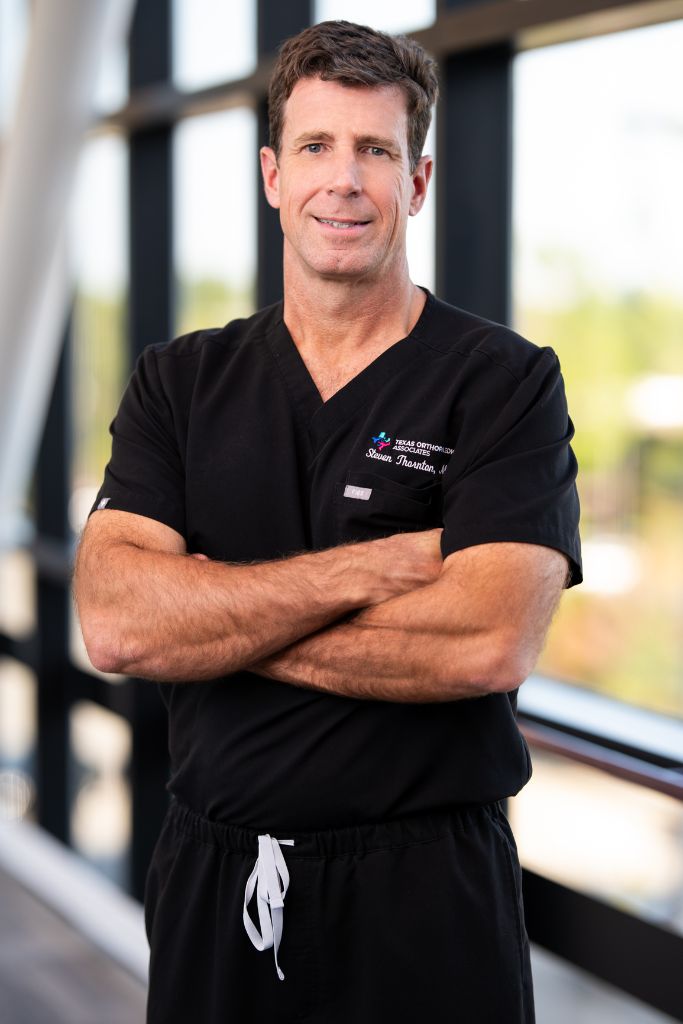
Steven J. Thornton, MD
Advanced biologic repairs and robotic-assisted partial knee replacement offer alternatives to total knee surgery.
DALLAS, TX, UNITED STATES, February 9, 2026 /EINPresswire.com/ -- Steven J. Thornton, MD, a board-certified orthopaedic surgeon with subspecialty training in sports medicine, is expanding the range of cartilage restoration and joint preservation procedures available to patients with knee injuries and early arthritis, offering options that may delay or avoid total knee replacement.
The approach combines established biologic cartilage repair techniques with robotic-assisted partial knee replacement for patients whose degeneration is too advanced for cartilage restoration but limited to one compartment of the knee. The goal is to preserve as much native bone, cartilage, and ligament structure as possible while restoring function and reducing pain.
Cartilage damage in the knee affects an estimated 900,000 patients annually in the United States and is a common precursor to arthritis. Historically, treatment options were limited once cartilage loss progressed. Newer surgical techniques now allow surgeons to address focal cartilage defects earlier and more precisely.
Steven J. Thornton, MD, a Dallas knee surgeon, offers several cartilage restoration procedures, including matrix-induced autologous chondrocyte implantation (MACI), which uses a patient’s own cartilage cells to repair defects typically measuring 2 to 10 square centimeters. He also performs CartiHeal Agili-C implantation, a synthetic osteochondral scaffold designed to regenerate both cartilage and underlying bone in a single procedure. Additional options include osteochondral allografts, which replace damaged cartilage and bone with donor tissue, and osteotomies that realign the knee to reduce stress on injured areas.
“These procedures are most effective when cartilage damage is identified before arthritis becomes widespread,” said Dr. Steven J. Thornton, a Dallas cartilage restoration surgeon and sports medicine specialist. “If we can restore the damaged area and correct alignment, we can often preserve the knee for many years and keep patients active.”
For patients who are not candidates for cartilage restoration due to more advanced degeneration, Dr. Thornton offers robotic-assisted partial knee replacement. Partial knee arthroplasty is appropriate for patients with arthritis confined to a single compartment and represents roughly 10 to 15 percent of all knee replacement procedures nationwide.
Unlike total knee replacement, partial knee replacement resurfaces only the damaged portion of the joint. Healthy cartilage, bone, and ligaments, including the anterior cruciate ligament, are preserved. Studies have shown that appropriately selected patients undergoing partial knee replacement often experience shorter hospital stays, faster return to daily activities, and greater knee range of motion compared with total knee replacement.
Robotic assistance allows detailed preoperative mapping of each patient’s anatomy and supports precise bone preparation and implant placement during surgery. This individualized planning helps align the implant to the patient’s native knee structure rather than relying on standardized measurements.
“Robotic assistance helps us tailor the procedure to the patient’s anatomy down to the millimeter,” Dr. Thornton said. “For the right patient, a partial knee replacement can feel more natural than a total replacement because it preserves normal joint motion.”
Dr. Steven J. Thornton, a Dallas knee doctor, evaluates each patient using imaging, physical examination, and activity goals to determine whether cartilage restoration, joint preservation, or partial knee replacement is the most appropriate option.
Fast Facts
- MACI is used for cartilage defects typically 2–10 square centimeters in size
- Partial knee replacement accounts for about 10–15% of knee replacements in the U.S.
- Robotic assistance enables patient-specific surgical planning and implant positioning
About Steven J. Thornton, MD
Steven J. Thornton, MD is a board-certified orthopaedic surgeon with fellowship training in sports medicine and shoulder surgery. He specializes in knee, shoulder, hip, and elbow procedures, with a focus on cartilage restoration, joint preservation, and minimally invasive surgical care.
Dr. Steven J. Thornton
Steven J. Thornton, MD
+1 214-265-3271
email us here
Visit us on social media:
LinkedIn
Instagram
Facebook
YouTube
TikTok
Other
Legal Disclaimer:
EIN Presswire provides this news content "as is" without warranty of any kind. We do not accept any responsibility or liability for the accuracy, content, images, videos, licenses, completeness, legality, or reliability of the information contained in this article. If you have any complaints or copyright issues related to this article, kindly contact the author above.
